 WordVale
Blog
Notes on the English language
 English words that used to mean something elseNice once meant foolish, silly meant blessed, and awful meant full of wonder. How English words drift in meaning, the patterns they follow, and why it matters when you read older books.
 The English mistakes German speakers make, and whyBecome and bekommen, since and seit, V and W, and the consonants German hardens at the end of a word. Each traces back to a specific feature of German, which is what makes them fixable.
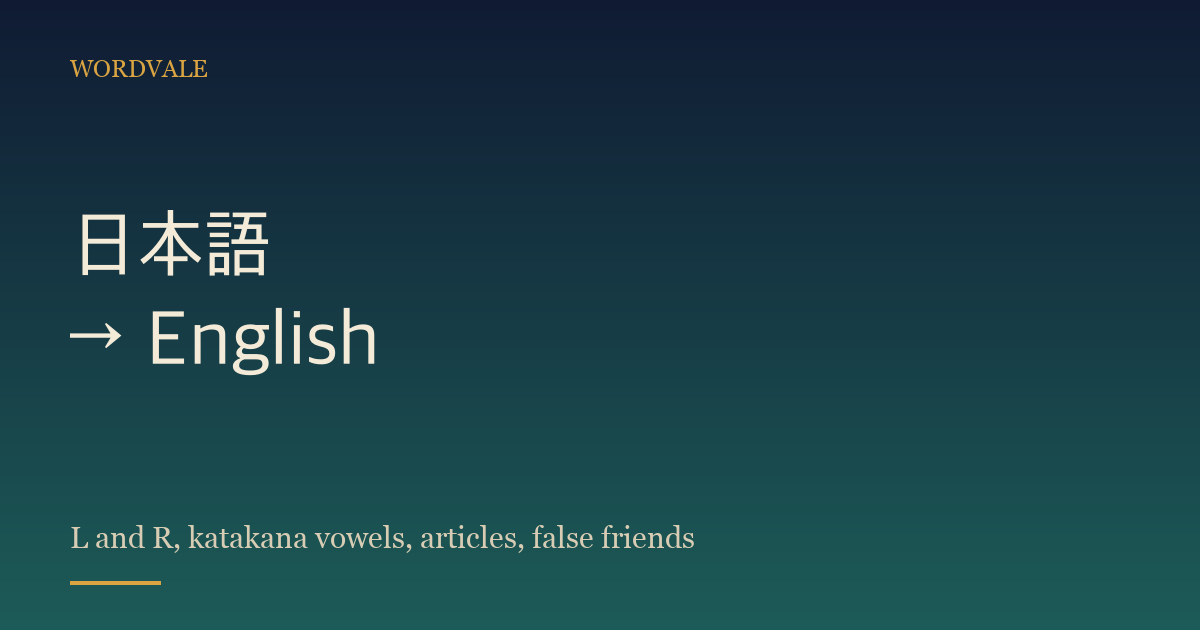 The English mistakes Japanese speakers make, and whyL and R, the vowel katakana adds to every consonant, articles, plurals, and wasei-eigo words like mansion and claim that mean something else in English. Each traces back to a specific feature of Japanese.
 Words that sound identical and mean nothing alikeTheir, there, they're — and forty more homophones that survive spellcheck because both spellings are real words. Why English has so many, and how to keep them straight.
 The English mistakes Spanish speakers make, and whyThe E before S, false friends, the missing subject, and confusing your age with your state of being. Each one traces back to a specific feature of Spanish.
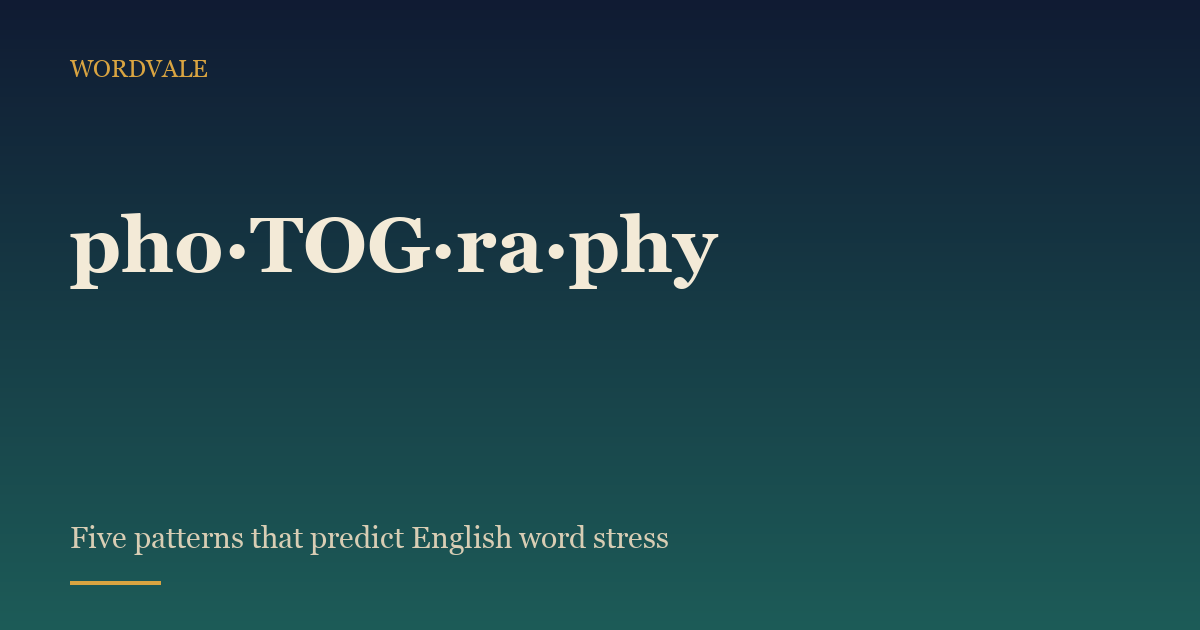 Where to put the stress in an English wordMost mispronunciations are stress in the wrong place, not wrong sounds. Five patterns that predict English word stress correctly most of the time.
 The phrasal verbs you actually hear every dayTwenty phrasal verbs that appear constantly in real English, grouped by the particle that carries the meaning — which is the pattern textbooks hide by grouping them by verb.
 The English mistakes Brazilian Portuguese speakers make, and whyFalse friends, the missing subject, -ed endings, and the vowel Brazilians add to the end of English words. Each traces back to a specific feature of Portuguese.
 Why English spelling lies about pronunciationThrough, though, thought, tough. The reason English spelling is so disconnected from sound is historical, and knowing the history makes the exceptions predictable.
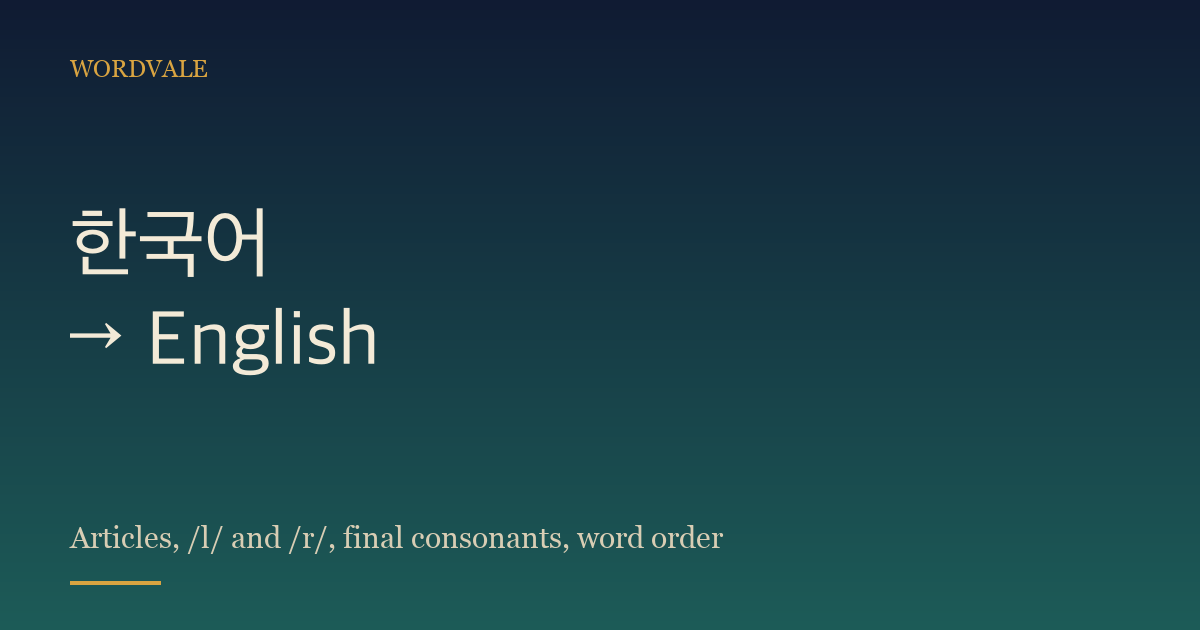 The English mistakes Korean speakers make, and why they happenArticles, the /l/–/r/ distinction, final consonants, and word order. Each one traces back to a specific feature of Korean — which is what makes them fixable.
Learn it for good
Save this word in WordVale and it comes back for review right before you'd forget it — with pronunciation, real examples, and optional translations. One purchase, no subscription.
Get WordValeFREE 7-DAY TRIAL · iPHONE & iPAD